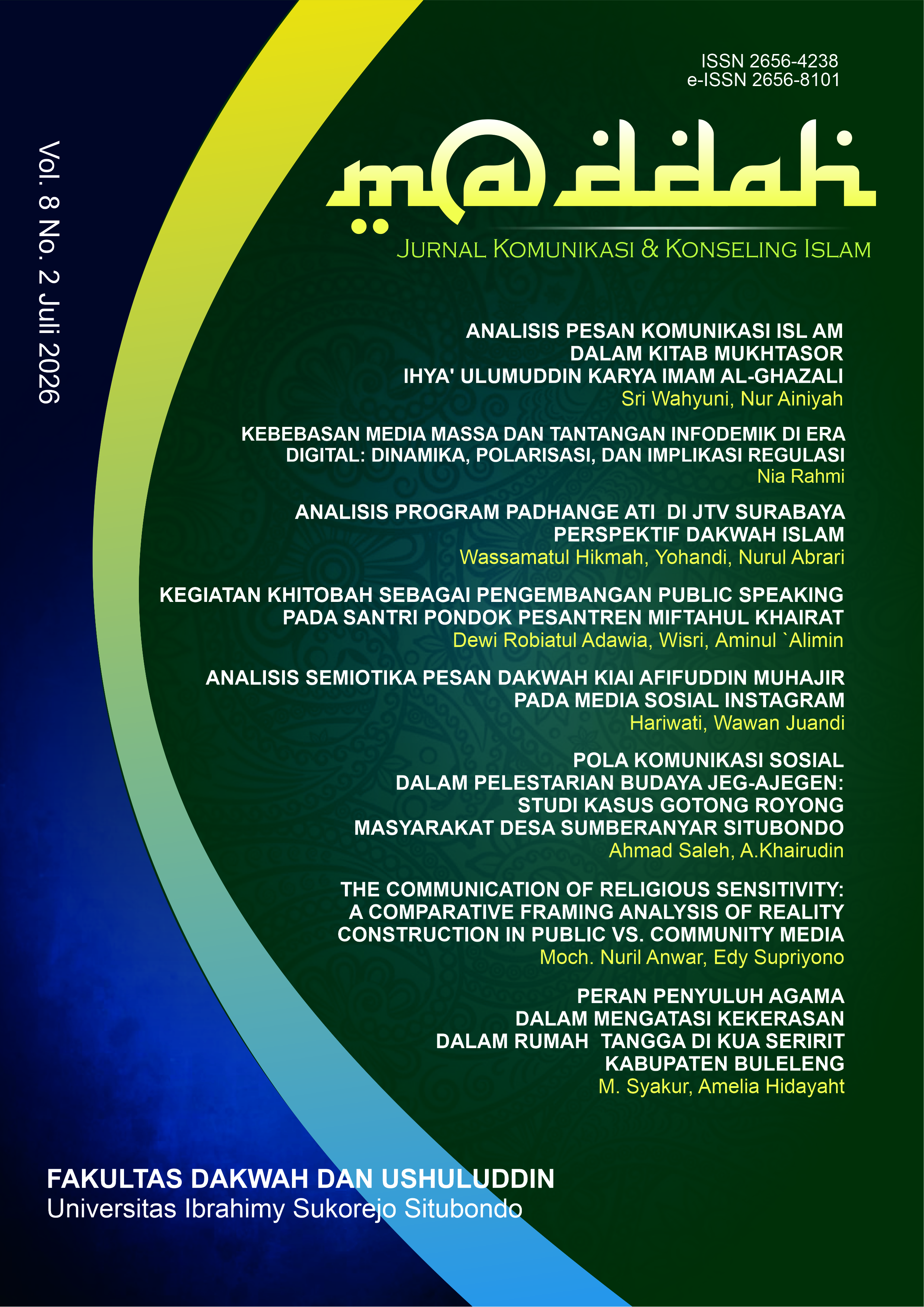
KEBEBASAN MEDIA MASSA DAN TANTANGAN INFODEMIK DI ERA DIGITAL: DINAMIKA, POLARISASI, DAN IMPLIKASI REGULASI
DOI:
https://doi.org/10.35316/maddah.v8i2.10309Keywords:
Media Freedom, Digital Era, and InfodemicAbstract
The rapid advancement of digital technology and the internet has fundamentally
transformed the dynamic relationship between mass media and society. While this
phenomenon expands the space for freedom of expression, it simultaneously introduces new
challenges, such as the infodemic, the spread of disinformation, and information polarization
driven by social media algorithms. This study aims to analyze the impact of digital technology
on media freedom, identify the challenges mass media face in maintaining information
integrity, and outline the regulatory roles of the government and relevant institutions in
fostering a balanced information ecosystem. A descriptive-analytic qualitative method was
employed, utilizing a literature review and content analysis of various scientific documents
and regulatory frameworks. The findings indicate that digital transformation has shifted
society’s role from passive consumers to content prosumers, requiring traditional media to
adapt through participatory journalism, rigorous verification, and collaboration with fact
checking organizations. Flexible regulations, enhanced public media literacy, and
independent oversight by institutions such as the Press Council and KPI are vital. In conclusion, media freedom in the digital age must be balanced with social responsibility
through synergy among the government, media, and the public to sustain democratic stability
and ensure a healthy public sphere.
References
HAM, K. (2023). Laporan Pemantauan
Hak atas Privasi di Era Digital
2022. Komisi Nasional Hak Asasi
Manusia.
Lestari, P., & Kurniawati, R. (2022). Peran
media massa dalam kampanye
vaksinasi COVID-19: Membangun
kesadaran dan kepercayaan publik.
Jurnal
Komunikasi
Indonesia,
10(2), 115–128.
Palupi, Y. (2021). Literasi media digital:
Tantangan dan peluang di era
Society 5.0. Kencana.
Puspitasari, D. (2022). Hukum dan regulasi
media digital: Tantangan dan
inovasi di era disrupsi. Rajawali
Pers.
Saragih, N. (2021). Media dan masyarakat:
Dinamika komunikasi di era digital.
Refika Aditama.
Srinowo, R. W. P., & Kurniawan. (2023).
Algorithmic curated reality: Ruang
eko, polarisasi, dan tantangan
demokrasi di media sosial. Jurnal
Komunikasi Global, 2(1), 45–58.
Tim Pakar RUU ITE. (2021). Naskah
akademik dan Rancangan Undang
Undang tentang perubahan atas
Undang-Undang Nomor 19 Tahun
2016
tentang
Informasi
dan
Transaksi Elektronik. Kementerian
Komunikasi
dan
Informatika
Republik Indonesia.
Wahyudi, R. (2023). Transformasi digital
ANTARA: Strategi bisnis dan
inovasi konten di era konvergensi.
Jurnal
Penelitian
25(1), 15–28.
World
Health
Komunikasi,
Organization.
(2020,
September 23). Managing the
COVID-19 infodemic: Promoting
healthy behaviours and mitigating
the harm from misinformation and
disinformation.
World
Health
Organization.
https://www.who.int/news/item/23
09-2020-managing-the-covid-19
infodemic-promoting-healthy
behaviours-and-mitigating-the
harm-from-misinformation-and
disinformation
Zuber, A., & Mumang, L. (2021). Urgensi
literasi digital dalam mencegah
penyebaran hoaks dan menjaga
privasi di media sosial. Jurnal Ilmu
Komunikasi, 19(1), 30–42.