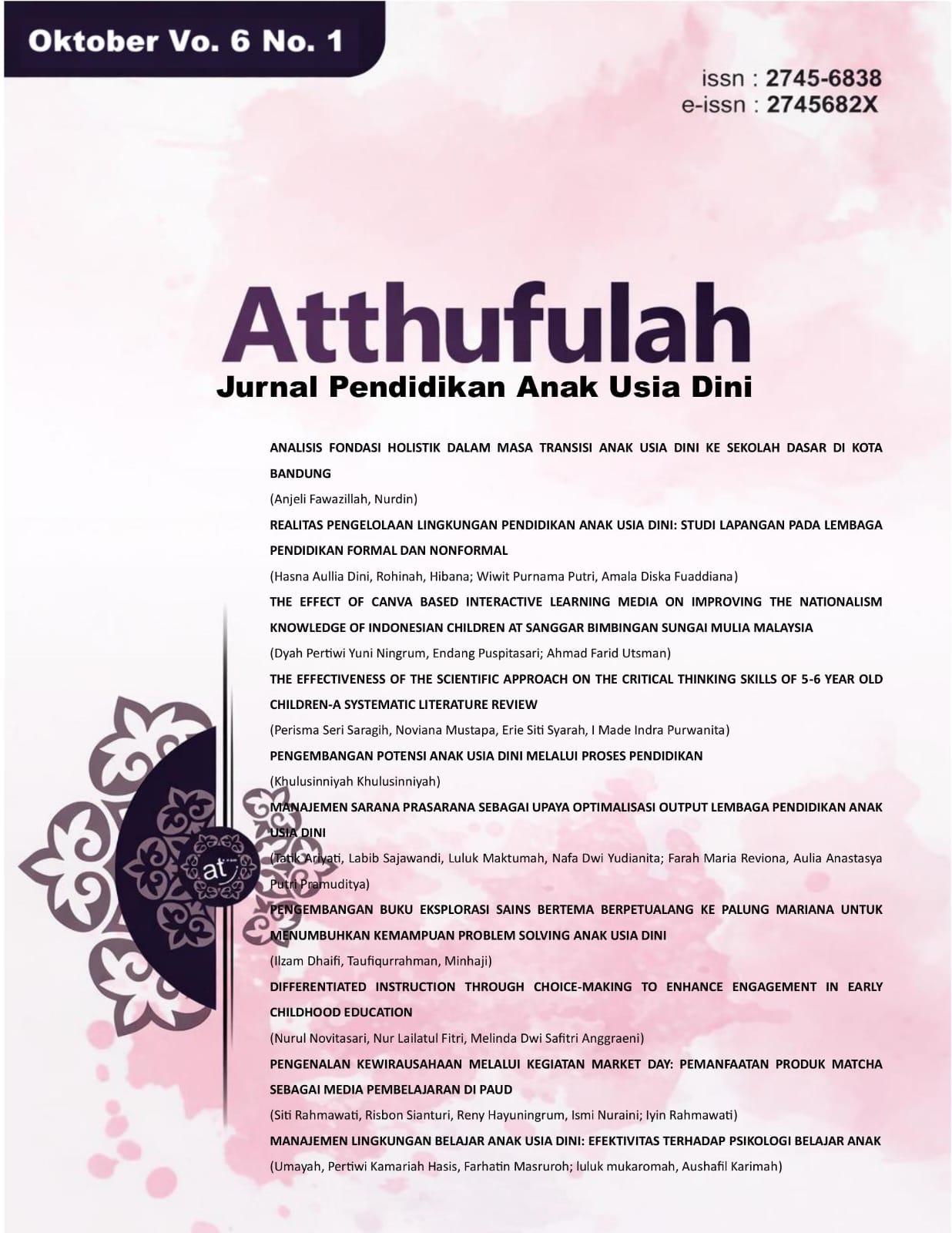
DIFFERENTIATED INSTRUCTION THROUGH CHOICE-MAKING TO ENHANCE ENGAGEMENT IN EARLY CHILDHOOD EDUCATION
Keywords:
Differentiated instruction, choice-making, early childhood education, student engagement, inclusive learningAbstract
Please Early childhood learners possess diverse characteristics in terms of interests, learning styles, and developmental readiness. However, instructional practices in many early childhood education settings often remain uniform, limiting opportunities for children to engage in activities aligned with their individual needs. This study explores the implementation of differentiated instruction through choice-making as a strategy to enhance children’s engagement and reduce disruptive behaviors in early learning settings. Employing a descriptive qualitative approach, the study was conducted at TK PKK I Bangilan Tuban with one teacher, 15 children aged 4–5 years, the school principal, and three parents as participants. Data were collected through participant observation, semi-structured interviews, and documentation, and analyzed using Miles and Huberman’s interactive model with triangulation to ensure validity. Findings indicate that differentiated instruction was carried out in three stages: preparation (diagnostic assessment of readiness, interests, and learning styles), implementation (differentiated content, process, and product), and evaluation-reflection. The results show that choice-making strategies significantly increased children’s active participation, focus, and enthusiasm during learning activities, while also reducing instances of tantrums and passive behavior. Children demonstrated greater autonomy, motivation, and positive emotional regulation when provided with meaningful options. This study concludes that differentiated instruction integrated with choice-making not only supports cognitive, social, and emotional development, but also fosters an inclusive, engaging, and equitable learning environment. The findings have theoretical implications for enriching the literature on differentiated instruction and practical implications for PAUD teachers in designing flexible, child-centered learning strategies.
References
Castelo, R. J., Kim, S., & Carlson, S. M. (2023a). More is more: toddlers do not show choice overload. Frontiers in Developmental Psychology, 1. https://doi.org/10.3389/fdpys.2023.1317426
Castelo, R. J., Kim, S., & Carlson, S. M. (2023b). More is more: toddlers do not show choice overload. Frontiers in Developmental Psychology, 1, 1317426.
Cipolletti, L. B., Murdoch, A., & Keelor, J. (2025). Impact of a Structured Shared Book Reading Intervention on the Vocabulary Knowledge of Preschool-Age Children: An Exploratory Study. Early Childhood Education Journal. https://doi.org/10.1007/s10643-025-01920-z
Connor, C. M., Morrison, F. J., Schatschneider, C., Toste, J. R., Lundblom, E., Crowe, E. C., & Fishman, B. (2011). Effective classroom instruction: Implications of child characteristics by reading instruction interactions on first graders’ word reading achievement. Journal of Research on Educational Effectiveness, 4(3), 173–207.
Creswell, J. W., & Poth, C. N. (2018). Qualitative inquiry and research design: Choosing among five approaches (4th ed). SAGE Publications.
Ferreira Nunes, A. K., de Cássia Amorim Barroso, R., & Fernandes Santos, F. (2019). The use of Triangulation as a tool for validation of data in qualitative research in Education . THE 4th WORLD CONFERENCE ON QUALITATIVE RESEARCH, 334–336. Retrieved from https://proceedings.wcqr.info/index.php/wcqr2019/article/view/307
Flick, U. (2018). An introduction to qualitative research. Qualitative Research in Applied Linguistics: A Practical Introduction, 3–24. https://doi.org/10.1057/9780230239517
Ghazali, A., Ashari, Z. M., Alias, A., & Hardmen, J. (2024). Exploring 5 Years of Research on the Conceptualization of Child Participation from the Perspective of ECE Philosophy: A Systematic Literature Review. International Journal of Academic Research in Progressive Education and Development, 13(1), 1586–1616. https://doi.org/10.6007/ijarped/v13-i1/20892
Goyibova, N., Muslimov, N., Sabirova, G., Kadirova, N., & Samatova, B. (2025). Differentiation approach in education: Tailoring instruction for diverse learner needs. MethodsX, 14, 103163.
Ika Maryani, Enung Hasanah, & S. (2023). Pembelajaran Berdiferensiasi pada Kurikulum Merdeka.
Katz, I., & Assor, A. (2007). When Choice Motivates and When It Does Not. Educational Psychology Review, 19(December). https://doi.org/https://doi.org/10.1007/s10648-006-9027-y
Kestner, K. M., Finch, K. R., & Kolb, R. L. (2023). Systematic review of procedures and outcomes of choice-based interventions with children. Education and Treatment of Children, 46(1), 77–106.
Marmoah, S., Budiarto, T., & Windansari, D. A. (n.d.). Perencanaan implementasi pembelajaran berdiferensiasi dalam pelajaran IPAS pada peserta didik kelas V sekolah dasar. 220–225.
Miles, M. B., Huberman, A. M., & Saldaña, J. (2014). Qualitative data analysis: A methods sourcebook. SAGE Publications.
Musasa, A. (2024). In Pursuit of Equal Access to Quality Education: A Guide to the Implementation of Differentiated Teaching for Diverse Minds. Open Journal of Social Sciences, 12(3), 119–130.
Novitasari, N., & Anisah, Z. (2024). Enhancing Kindergarten Teachers’ Competence in Developing Innovative Learning Media Based on Canva. Al Hikmah Indonesian Journal of Early Childhood Islamic Education, 8(1), 91–99. https://doi.org/10.35896/ijecie.v8i1.824
Patton, M. Q. (2015). Qualitative research & evaluation methods. In academia (4th ed). SAGE Publications.
Ristiyati, R. (2023). Differentiated instruction in Mover Kindegarten: A Model implementation With Kurikulum merdeka. Journal Of Early Childhood Care And Education, 66–80. https://doi.org/10.26555/jecce.v6i1.8775
Sønsthagen, A. G. (2024). The learning early childhood education and care institution as an inclusion arena. European Early Childhood Education Research Journal, 32(3), 357–370. https://doi.org/10.1080/1350293X.2023.2254533
Tiger, J. H., Hanley, G. P., & Hernandez, E. (2006). An evaluation of the value of choice with preschool children. Journal of Applied Behavior Analysis, 39(1), 1–16.
Timmons, K., Cooper, A., Bozek, E., & Braund, H. (2021). The impacts of COVID-19 on early childhood education... Early Childhood Education Journal. Qualitative Inquiry and Research Design, 49(5), 887–901. https://doi.org/https://doi.org/10.1007/s10643-021-01245-z
Tomlinson, C. A. (1995). Differentiating Instruction for Advanced Learners in the Mixed-Ability Middle School Classroom. ERIC Digest E536.
Xu, X., Shen, W., Islam, A. Y. M., & Zhou, Y. (2023). A whole learning process-oriented formative assessment framework to cultivate complex skills. Humanities and Social Sciences Communications, 10(1), 1–15.
Castelo, R. J., Kim, S., & Carlson, S. M. (2023a). More is more: toddlers do not show choice overload. Frontiers in Developmental Psychology, 1. https://doi.org/10.3389/fdpys.2023.1317426
Castelo, R. J., Kim, S., & Carlson, S. M. (2023b). More is more: toddlers do not show choice overload. Frontiers in Developmental Psychology, 1, 1317426.
Cipolletti, L. B., Murdoch, A., & Keelor, J. (2025). Impact of a Structured Shared Book Reading Intervention on the Vocabulary Knowledge of Preschool-Age Children: An Exploratory Study. Early Childhood Education Journal. https://doi.org/10.1007/s10643-025-01920-z
Connor, C. M., Morrison, F. J., Schatschneider, C., Toste, J. R., Lundblom, E., Crowe, E. C., & Fishman, B. (2011). Effective classroom instruction: Implications of child characteristics by reading instruction interactions on first graders’ word reading achievement. Journal of Research on Educational Effectiveness, 4(3), 173–207.
Creswell, J. W., & Poth, C. N. (2018). Qualitative inquiry and research design: Choosing among five approaches (4th ed). SAGE Publications.
Ferreira Nunes, A. K., de Cássia Amorim Barroso, R., & Fernandes Santos, F. (2019). The use of Triangulation as a tool for validation of data in qualitative research in Education . THE 4th WORLD CONFERENCE ON QUALITATIVE RESEARCH, 334–336. Retrieved from https://proceedings.wcqr.info/index.php/wcqr2019/article/view/307
Flick, U. (2018). An introduction to qualitative research. Qualitative Research in Applied Linguistics: A Practical Introduction, 3–24. https://doi.org/10.1057/9780230239517
Ghazali, A., Ashari, Z. M., Alias, A., & Hardmen, J. (2024). Exploring 5 Years of Research on the Conceptualization of Child Participation from the Perspective of ECE Philosophy: A Systematic Literature Review. International Journal of Academic Research in Progressive Education and Development, 13(1), 1586–1616. https://doi.org/10.6007/ijarped/v13-i1/20892
Goyibova, N., Muslimov, N., Sabirova, G., Kadirova, N., & Samatova, B. (2025). Differentiation approach in education: Tailoring instruction for diverse learner needs. MethodsX, 14, 103163.
Ika Maryani, Enung Hasanah, & S. (2023). Pembelajaran Berdiferensiasi pada Kurikulum Merdeka.
Katz, I., & Assor, A. (2007). When Choice Motivates and When It Does Not. Educational Psychology Review, 19(December). https://doi.org/https://doi.org/10.1007/s10648-006-9027-y
Kestner, K. M., Finch, K. R., & Kolb, R. L. (2023). Systematic review of procedures and outcomes of choice-based interventions with children. Education and Treatment of Children, 46(1), 77–106.
Marmoah, S., Budiarto, T., & Windansari, D. A. (n.d.). Perencanaan implementasi pembelajaran berdiferensiasi dalam pelajaran IPAS pada peserta didik kelas V sekolah dasar. 220–225.
Miles, M. B., Huberman, A. M., & Saldaña, J. (2014). Qualitative data analysis: A methods sourcebook. SAGE Publications.
Musasa, A. (2024). In Pursuit of Equal Access to Quality Education: A Guide to the Implementation of Differentiated Teaching for Diverse Minds. Open Journal of Social Sciences, 12(3), 119–130.
Novitasari, N., & Anisah, Z. (2024). Enhancing Kindergarten Teachers’ Competence in Developing Innovative Learning Media Based on Canva. Al Hikmah Indonesian Journal of Early Childhood Islamic Education, 8(1), 91–99. https://doi.org/10.35896/ijecie.v8i1.824
Patton, M. Q. (2015). Qualitative research & evaluation methods. In academia (4th ed). SAGE Publications.
Ristiyati, R. (2023). Differentiated instruction in Mover Kindegarten: A Model implementation With Kurikulum merdeka. Journal Of Early Childhood Care And Education, 66–80. https://doi.org/10.26555/jecce.v6i1.8775
Sønsthagen, A. G. (2024). The learning early childhood education and care institution as an inclusion arena. European Early Childhood Education Research Journal, 32(3), 357–370. https://doi.org/10.1080/1350293X.2023.2254533
Tiger, J. H., Hanley, G. P., & Hernandez, E. (2006). An evaluation of the value of choice with preschool children. Journal of Applied Behavior Analysis, 39(1), 1–16.
Timmons, K., Cooper, A., Bozek, E., & Braund, H. (2021). The impacts of COVID-19 on early childhood education... Early Childhood Education Journal. Qualitative Inquiry and Research Design, 49(5), 887–901. https://doi.org/https://doi.org/10.1007/s10643-021-01245-z
Tomlinson, C. A. (1995). Differentiating Instruction for Advanced Learners in the Mixed-Ability Middle School Classroom. ERIC Digest E536.
Xu, X., Shen, W., Islam, A. Y. M., & Zhou, Y. (2023). A whole learning process-oriented formative assessment framework to cultivate complex skills. Humanities and Social Sciences Communications, 10(1), 1–15.
Downloads
Published
How to Cite
Issue
Section
License
Copyright (c) 2025 Nurul Novitasari, Nur Lailatul Fitri, Melinda Dwi Safitri Anggraeni

This work is licensed under a Creative Commons Attribution-ShareAlike 4.0 International License.











_by_Matematohir.jpg)